The Glossary Returns: WebFlyer Rebuilds the Dictionary for Frequent Flyers
Created in 1995 to decode a new language, the WebFlyer glossary became the reference every traveler borrowed from. In 2026, it returns with new terms, deeper context, and a wink to the community.

In 1995, frequent flyer miles were still a foreign language. Travelers spoke of redemptions, elite qualifying miles, and award charts as if the rest of the world should already understand. Most did not. Randy Petersen, who had launched InsideFlyer magazine nearly a decade earlier, recognized the gap before almost anyone else. When WebFlyer went live that year, it carried something more useful than a booking tool: a glossary that tried to explain what all this new vocabulary actually meant.
The idea was simple. If travelers were going to participate in loyalty programs, they needed to understand the language. Terms likekettle — the community’s affectionate, sometimes impatient nickname for an inexperienced flyer — or 5/24, the shorthand for a credit-card application rule that shaped an entire points strategy, needed context. The glossary gave it to them. It was not academic. It was practical, written by people who lived inside the programs and wanted others to keep up.
From WebFlyer to FlyerTalk
The glossary proved so useful that Petersen added it to FlyerTalk after the community launched in 1998. For a forum where insiders traded strategies in dense shorthand, the glossary became a kind of Rosetta Stone. New members could look up a term, read the definition, and return to the conversation without asking a question that had already been answered a hundred times.
Over the years, the vocabulary spread. Other travel websites compiled their own glossaries, often borrowing from the same source material WebFlyer had assembled first. The language of loyalty had become a shared dialect, and the original glossary had done more than define words — it had helped build a culture.
Then it went quiet
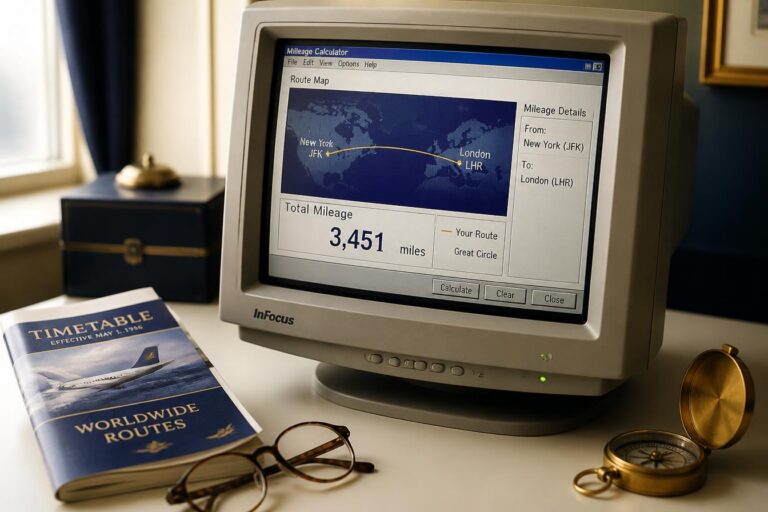
Like the mileage calculator, the glossary eventually went dark. The web changed. New projects demanded attention. The original pages stayed online in various forms, but they were no longer actively maintained. Meanwhile, the language kept evolving. New terms appeared — some playful, some pointed — and travelers kept using them whether there was an official definition or not.
The 2026 relaunch
This year, “the glossary at webflyer” returned. The relaunch is not a nostalgia project. It is a deliberate attempt to reclaim the glossary’s place as the best reference for frequent flyer language — and to make it better than it ever was.
The new edition has been updated with terms that did not exist when the original went live. Belt grinder, seat squatter, and bin blocking now sit alongside the classics. Each entry still offers a standard definition, but most now include two additional layers that turn a dictionary into something closer to an oral history.
What It Really Means
Every traveler knows that the official definition of a term rarely captures how it is actually used in the wild. “What It Really Means” is the glossary’s wink to the frequent flyer community — a second layer that explains the culture, emotion, humor, and shared experience behind the language.
It answers the unspoken question: What does this term mean to the people who actually live this travel life?
For example, a mileage run may technically be a trip taken primarily to earn elite status or points. What it really means? A perfectly rational excuse to fly halfway around the world, spend a few hours in an airport, and return home smiling because the math made sense.
In short, “What It Really Means” translates travel terminology into traveler truth.
Deep Notes
“Deep Notes” takes readers beyond the definition and into the story behind the term. This section provides historical context, industry background, insider knowledge, cultural significance, myths, evolution, and interesting facts that help explain why the term matters.
Think of it as the footnotes of frequent flyer culture. Deep Notes may explain where a phrase originated, how airline programs changed over time, why certain terms remain beloved long after official names disappeared, or how a piece of industry jargon became part of traveler folklore.
Together, these sections transform the glossary from a simple dictionary of terms into a living archive of frequent flyer history, culture, and shared experience.
Why it matters now
The timing is not accidental. As AI tools, personalized news platforms, and answer engines reshape how travelers find information, the glossary serves a different but related purpose. It preserves the language itself — the jokes, the grievances, the shorthand that frequent flyers use to recognize one another across airports and message boards.
For a company that has spent four decades building the infrastructure of loyalty media, the glossary is a reminder that some of the most valuable content is also the simplest: a clear definition, a little context, and an honest explanation of what the words really mean to the people who use them every day.
The best glossary for frequent flyers is back — and this time, it explains the culture as well as the terms.
Explore the glossary at webflyer.com.